

Few artists embody transformation as completely as Chris Corner, the creative force behind IAMX. From his early days with Sneaker Pimps to more than two decades of boundary‑pushing solo work, Corner has continually reinvented himself through sound, performance, and unflinching emotional honesty. A self‑professed, socially anxious geek, he first had his musical imagination jolted awake by a "weird uncle" who fed him a steady diet of wonderfully odd sounds. What began as curiosity quickly became obsession — and that obsession opened the door to a lifelong romance with technology. That spark never dimmed. Today, as IAMX, Corner not only writes and performs every note but also sculpts his music from the ground up as its producer. His journey has taken him from the electronic undercurrents of Berlin to the stark sunlight of California, where personal battles with depression, insomnia, and neurodiversity have reshaped both his life and his art. At the heart of IAMX lies a rare, almost sacred bond between artist and audience. Since settling in Southern California, Corner has transformed his desert home into a creative sanctuary — a place where fans and fellow artists gather, share, and create within an environment shaped entirely by his own hands. With the release of "Artificial Innocence" — a tense, confessional darkwave anthem marking the beginning of a new IAMX era — and a fresh European tour underway, Corner stands at yet another pivotal moment. Just before he hit the road, we spoke with him for an in‑depth conversation that revealed far more than expected.
Interview with: Chris Corner
Conducted by: Tomaz and Jerneja
Edited by: Jerneja
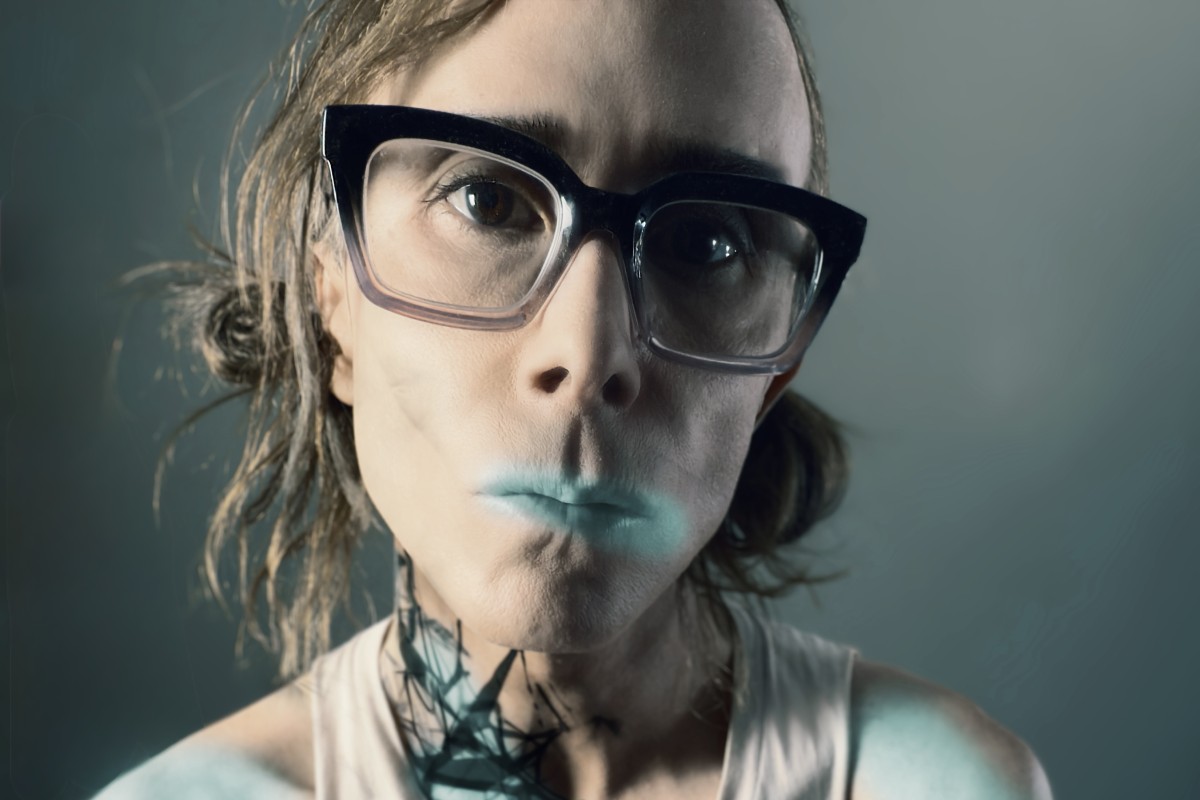
Jerneja: Hello, Chris. It's a pleasure to meet you — even if only over Zoom. Before we begin, I'm curious: had you ever come across Terra Relicta, our dark music online magazine and radio station, before we contacted you about the interview and concert accreditations?
Chris: I have not, but that doesn't mean anything. I live like a monk — I don't go out, and I don't look at anything. But, Victoria, who works for me, knows your publication, and she was pretty excited, but I don't know anything.
Jerneja: This next question is one you’ve been asked before, though it's never really received a definitive answer. I'll try my luck as well. Does IAMX stand for "I'm anonymous" or "I'm androgynous" — given that X is the chromosome both females and males share? Do either of those interpretations resonate with you, or is the truth something more elusive?
Chris: It's all of those things. When I chose the name, it hit everything that felt right to me. Obviously, I'm a gender‑fluid kind of person, and I've often advocated for the expiration of identity and things like that, like my androgyny. But the "X" is related to that — it's related to variables, to being changeable, to being open. And the beauty of that "X" is that it can mean many things, and I feel like that. One of the nicest things about having that name is that I can explore, that I can change, and it changes with me. It's an abstract name, but also quite direct. It's just perfect, and I'm very lucky to have found it.
Jerneja: It's also very Google‑ and social‑media‑friendly, because you can't be misplaced or confused with somebody else.
Chris: Yeah, and I think people get the name wrong a lot, too. For example, if they're looking for "IAMX". There are Xs used in so many things. It just felt right when I found the name.
Tomaz: IAMX has often been described as an alter ego, a mask, a mirror — sometimes even a form of self‑therapy. When you step into IAMX, do you feel you're becoming someone else, or are you revealing a part of yourself that everyday life isn't particularly fond of?
Chris: Exactly — you've answered the question. It has changed over the years. I built that thing as a way to express parts of myself that I wasn't sure society, or the people in my life, could really understand. So it was a mask for a while, but when I realised it wasn't changing — that it kept coming back, that I still needed to express this part of me — I realised that it's just me. It's not the persona; it's something to enjoy, to play with a lot. You know, it's very theatrical, and there's escapism involved when I become that thing, or at least when I release that thing. I used to think it wasn't real, but it's totally real, and it hasn't changed. I've only become more in touch with, or aligned with, that part of myself. The guy you're talking to now might seem very different to IAMX, but if we talked for two hours, it would all come out. It's all there. Finding the balance has been difficult, because it's quite extreme — it feels a bit schizophrenic sometimes, going from this to that — but I need both to enjoy life, or simply to exist. It's a full expression of everything that I am. As much as I enjoy being here in the desert, in nature, in the wilderness, with animals, quiet, with no people around, I also need to perform for people, to feel the bass and get naked. I need both of those things.
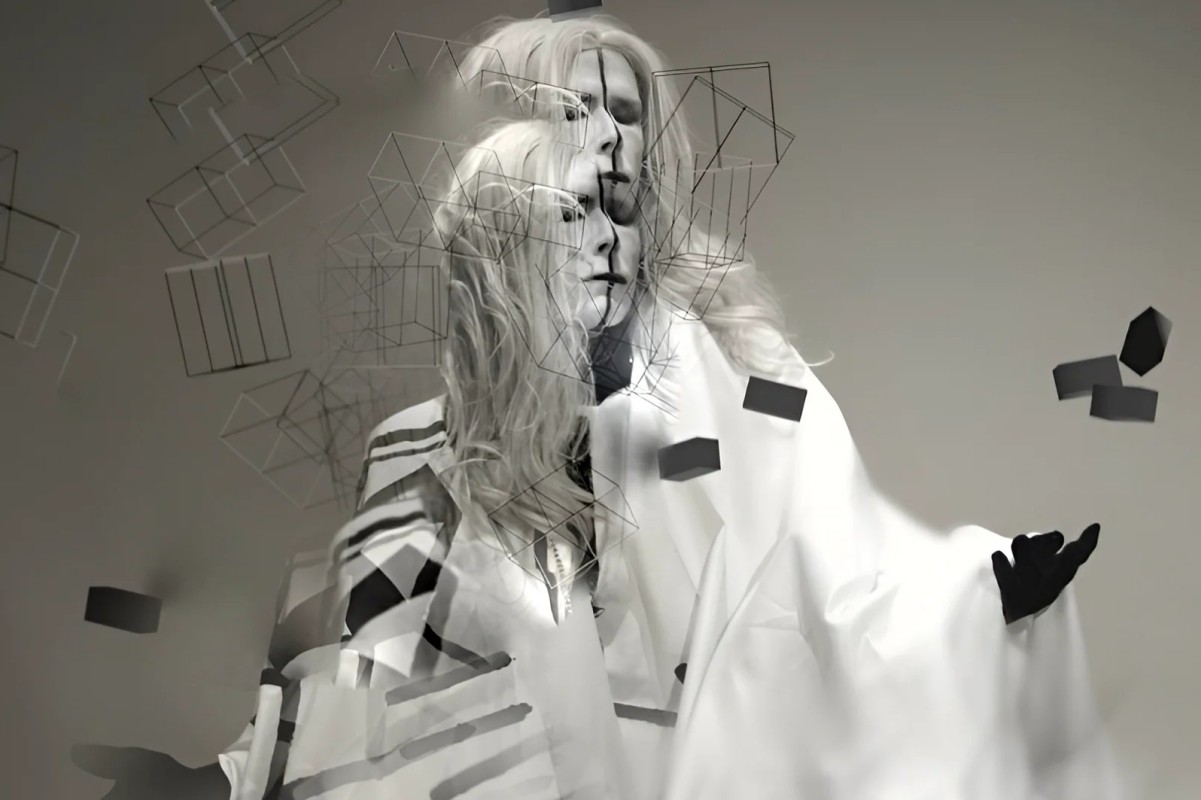
Tomaz: You partially answered my next question, but still. Do you ever worry that the persona might consume the person — that the performance could overshadow the human being behind it?
Chris: Yeah, it's weird to be an artist. It's an uncomfortable thing sometimes, to feel those feelings. When I'm in that mode — when I'm on stage and performing, and I feel this thing — it's bigger than the universe. It feels like I'm just going to explode. I need to be out there, I'm high on adrenaline, and I just want to fuck everybody. There are so many feelings at the same time. It feels dangerous, it feels risky, like I'll lose control and just never come back. I've seen how people lose their minds, and I've seen how close I've come to the edge of sanity. I think we all do, at some point in our lives, face that. I'm facing it regularly, and I'm forcing it on myself a lot. I obviously need that, but it feels risky sometimes. I've thought that I might just die on stage — in a positive way. If I'm going to go, that's where I'm going to go. I don't know… just to be at peace, having expressed those feelings. It's a very strange thing, and it's beautiful, but it's also dreadful at the same time. I don't know if it's just me who feels that, or if it's art that creates those kinds of emotions in people, or in the artists themselves. I think artists are very sensitive to the universe, to bigger ideas, to big love, to all of those things that are beyond interpersonal relationships. There's so much going on there, and I do feel swept away by it. The technicality of what I do — knowing that I have to press the button, sing the right notes — that keeps me grounded, if that makes sense. Being professional as a musician keeps me from kind of exploding and flying off into the universe.
Jerneja: You've recently released the video single "Artificial Innocence" — a track that began life as a tour‑exclusive B‑side on UNMASK, yet has now re‑emerged as a fully realised single with its own visual identity. What made you feel that this piece deserved a second life?
Chris: This is a good question. It's difficult to know. I think a lot of things that were going on in my personal life are in that track, lyrically, and it just kept resonating with me — it kept carrying the feeling around with me. And when we released it last year, it wasn't finished. I couldn't let it go. It was okay to release it on UNMASK — I know we had to, and we needed some content — but it was more like an experimental version. So I was okay with it, but I don't know… I just kept carrying it around, and I couldn't let it go. I felt like it needed more attention, more love, and only when it's truly finished can I move on. Only then can I mark this time in my life. This track means that to me, and then I can move on. Just like when an album means this or that and defines certain things. It's like a diary — a way that I analyse and deconstruct my life. This is an important personal and emotional track for me, so I felt it needed more attention. I decided to go back to it, and secretly, for about three months, I was playing with it. I didn't really know what I wanted to do, or what would make it better — I just messed around and kept going. I thought I needed to express it more vocally, to bring more melody into it. I don't know. It needed to be more caressed, so I spent some time with it, and it became this thing. We started talking about the idea that this could also be the title of the tour: "This is the track — let's make a video, and name the tour after it".
Tomaz: The new version feels sharper, darker and more urgent than the original. But what does "artificial innocence" signify — given that the phrase appears in some of your other tracks as well? For example, in "The Ocean".
Chris: Yes, it does. I think it's an internal struggle about whether we are fully aligned. Am I fully aligned with who I am, and can I express that to others so that they'll know who I am? So then we can be safe, and I'm fully expressing what I want — my purpose. This "artificial innocence" is about whether I'm guilty of lying to myself, of lying to others. You know, am I aligned with trying to be the best thing that I can. And when I deconstruct my life in that track — there were some very stressful things going on in my life, and it's a long story. We all have interpersonal issues. As an autistic person, I have issues with the theory of mind. So, theory of mind is a problem I have when I'm trying to understand what another person is saying, or wants, or needs. I'm trying to comprehend another person's mind, and I have problems with that. Even though I'm very good at observing the world, I often get that wrong, and it's quite destructive. I feel like I'm a decent person and I'm trying to live a good life, but it doesn't matter — if you sometimes get things wrong, it's quite destructive.
Jerneja: Well, the bright side of being autistic is that you have many talents.
Chris: Thank you, I appreciate that. I'm aware of it, but I'm also very autistically focused on one thing. I'm very confident and happy with many other parts of my life. There are just some challenges that I face in interpersonal relationships and in understanding others. I tend to dwell on that a lot, and the track "Artificial Innocence" resonates with that idea.
Jerneja: You've described "Artificial Innocence" as the doorway to a new creative chapter. What aspects of this track signal a shift away from the Fault Lines era? And does its release perhaps hint at a new album on the horizon?
Chris: Yes, to all of that. It feels like a transitional moment — a track to take me from one era to the next, because Fault Lines is done. This was a way to release myself from it. A bit like when you can't release yourself from a very toxic, co‑dependent relationship or something — you just can't let it go. And I really felt like I couldn't let Fault Lines go. I don't know why. I could have done Fault Lines 3 — we actually talked about that. I think what I've done now is a gentle way to move into the next phase, which will be a new album. I don't think it will sound like "Artificial Innocence", because this one is more in line with Fault Lines — it reflects a bit of the past, it's more melodic and straight. I have a lot of ideas for the next phase, but I'm not going to say them, because I often say stuff and then it doesn't happen. I'd rather just do it, you know. Let's just say I'm excited inside for the next thing.
Jerneja: The video for "Artificial Innocence" feels tense and claustrophobic, yet strangely elegant. What emotions or ideas were you trying to capture visually?
Chris: I think "elegant" is quite a nice description. I love elegance — I love things to flow and to feel effortless. At the same time, it's kind of motivating, quite deep, and full of expressive emotions. I like to poke at people's attention. It's like a fucked‑up, grainy thing wrapped in elegance, and when you dig deeper, it's all kind of broken, and wrong, DIY…
Jerneja: Maybe a provocation as well?
Chris: Exactly! That's the word. And English isn't even your first language, right?
Jerneja: Well, it's similar in Slovenian. We say "provokacija".
Chris: Oh, really. There we go. Well, that's important to me. I like to provoke emotion without being too crass. So that's where the elegant thing comes from, and I feel like it's also more consumable. I also love beautiful imagery, and I love fucked‑up imagery, and punk imagery, art‑house imagery — but I also love nature, simplicity and elegance. I guess that's where this combination comes from. Choosing the monochrome felt like the right move to add that landscape‑y, outdoors, beautiful feeling. I don't know if I succeeded in that, but there were a lot of practical things I had to do as well. If you know any independent artist — or maybe you are one — then you know how hard it is to create things all by yourself. The practicality of doing that usually leads to what you can actually achieve. A lot of it I wouldn't really choose to do, but I just had to do it, because it's the only way to do it. So it's one camera, and for example, I had to use the camera on myself — practicality led it. It's such a DIY, practical approach.
Tomaz: I've noticed one detail in the video – you're wearing a cap with the Milwaukee logo. Is that company perhaps your sponsor?
Chris: No, haha, but it's a good catch! It was simply practical. Where I shot the video – here on the land I have in California – it's a very large area. To get to the interesting part is quite a long walk. I had to carry all the equipment, and that cap is just my work cap. While I was filming on my own, just me with my iPhone, I realised I couldn't see the screen in the sun. I didn't have anything else with me, so I used the cap. It was a practical solution, so I could actually see what I was doing while filming myself. But I actually like how it turned out. I should reach out to Milwaukee – maybe they'd love that, haha – but I don't think it would be the right kind of sponsorship.

Jerneja: Or you could try your luck and send them an invoice for the promotion you've already done for them…
Chris: Exactly, right, haha. I think they'd be really freaked out.
Tomaz: Your sound has shifted dramatically over the years, well, not that dramatically — from the decadent electro‑cabaret of the early albums to the modular, introspective textures of your more recent work. What do you think has driven that evolution? Is it curiosity, necessity, or something more existential?
Chris: That's a great question. I think curiosity. It was a big shift when I discovered modular synthesis. During Covid, there was a big shift for me. During that time, everybody had to downsize and spend time in solitude, which I'm used to. I ended up experimenting a lot with physical synthesis and the computer. It was a lot of fun, and it brought a new life into how I viewed electronic music. So, I decided to experiment with that, and it made me go back to the computer. I tried to replicate all that with the computer and vice versa. I think that I got a bit obsessed with electronic sound rather than acoustic stuff, instruments and things like that. I think that will come back, because my first love is the acoustic guitar, so I think that it'll always be with me. What's beautiful about electronic music is that it feels boundless or endless. It's almost like meditating when I produce, and I can spend hours and hours with one sound. It's beautiful, it can be frustrating, but it can be quite an experience. I enjoy the act of creating, and electronic music gives me that. I hope that going back to the guitar will give me the same feeling. When I was a kid, I was obsessed with classical guitar, and I loved it. I have this fantasy of going back to classical guitar, but I don't know if it'll really happen.
Tomaz: Kiss + Swallow and The Alternative have become cult classics. How do you feel about those early works now — with affection, distance, discomfort?
Chris: Always with discomfort. Listening to old stuff is fascinating. In a way, an artist is constantly trying to achieve the same thing. It feels as though you're doing something different, but if I'm truly honest, I'm still trying to write the same song I was trying to write when I made Kiss + Swallow, but I never quite get there. It feels like never completing the song, so you try again, and you write something similar but a bit different. I think we're always aiming for the same goal and never fully reaching it. When I listen back, it doesn't really surprise me — sometimes the lyrics surprise me. I sound more mature than I thought I was. I'm surprised I was saying things I thought I understood back then, but I don't think I really knew what I was saying. Yet I said them anyway. I know it now; I'm more in contact with myself. It's a fascinating experience. I love the energy and the sense of provocation — it's exciting, and I still love that. I'm proud that I was confident enough to just do what I wanted to do, because it's quite hard in the music industry to be yourself. I was myself, but I wasn't sure if anybody would give a fuck. That's all I did, and that's all I continue to do. I'm just happy and lucky that some people do get it. It's amazing.
Tomaz: IAMX live shows are almost ritualistic — intense, sensual, theatrical. How do you conceptualise the visual world of a tour? Is it an extension of the music, or a separate creative entity?
Chris: It's all bound together. When I'm writing or producing a song, I think of the video very visually. The emotions I'm feeling, I translate into visuals, and vice versa — something visual sparks something I want to put into sound. It's all so connected for me, and each part influences the other. So the song influences the video, the video influences the live performance, and the live performance influences the next video. I often take the video and use it on stage as a visual element. I manipulate it to create the right lighting behind me, to set the right mood, and then that mood influences the performance. It's all interconnected — it's a bit like a theatrical show, a whole theatrical production. What always fascinates me is how to keep everything consistent, meaningful, sexy, fun, and energetic.
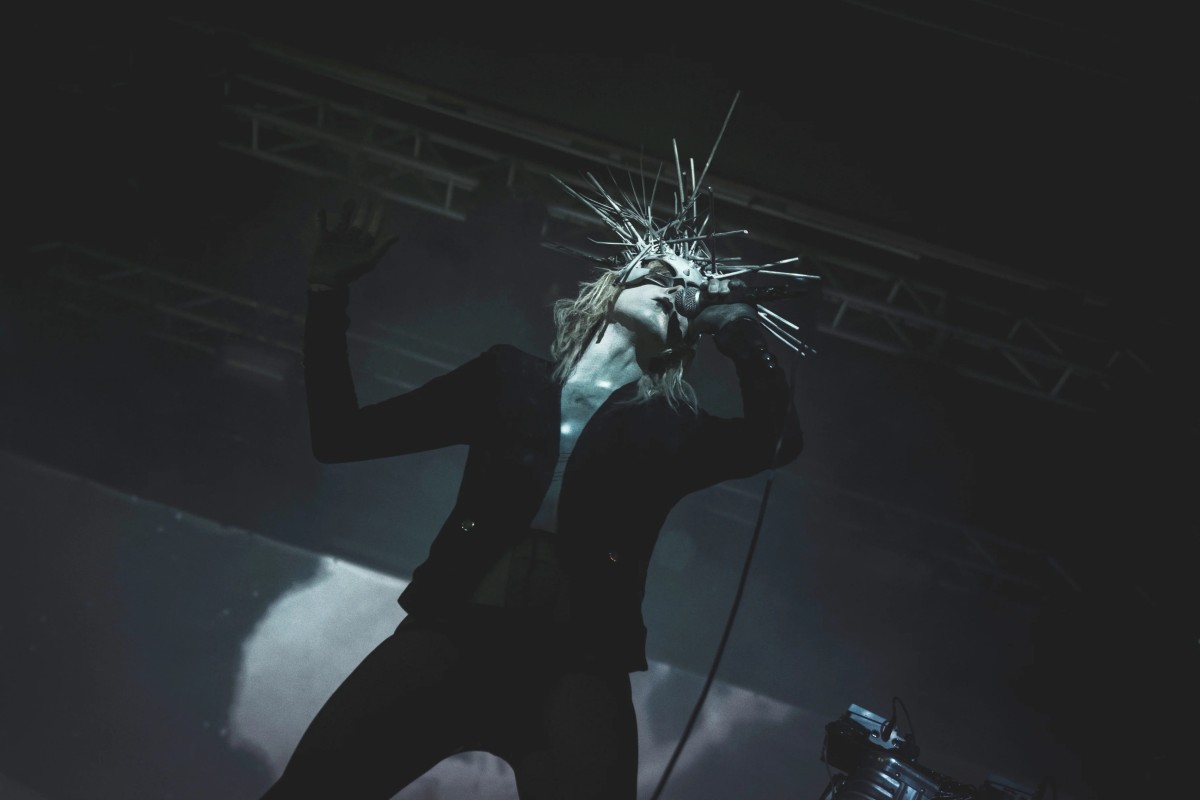
Jerneja: Also, your performances are famously emotional and physically demanding. How do you sustain that level of vulnerability night after night?
Chris: I don't know. I've asked myself that question many times. I think it's because I'm very good at motivating myself to complete something, to see it through. I'm very afraid of myself, but in a productive way — it's good, because if that's my purpose, then some things are more important than my pain. If I'm on stage and I'm not happy about something, if something feels off, I just look beyond it, because the purpose is bigger. It feels like a duty — a duty to give this thing, to put it into the world, to provoke people to think, to enjoy, to laugh and cry, to fuck, to do all the things that create happiness. Maybe not happiness exactly, but it's a duty. I think that's where the motivation comes from. The purpose is bigger than my pain.
Jerneja: Since you've mentioned happiness — I really like your song "Happiness". The way you sing "liar" is deeply affecting. It actually brings Sopor Aeternus to mind — not in terms of sound, but in that raw pathos, that sense of pain or disappointment the interpretation conveys. Do you feel any affinity with Sopor Aeternus, or which bands speak to you most strongly?
Chris: Oh, thank you. I don't know this artist. So what do I associate with? I don't know — I don't listen to anything. I know it sounds weird, and it might sound like I'm avoiding the question, but I don't associate with things. I'm not out there looking. I only passively consume art and music — if I'm on the road, in my car, and something presents itself to me, I might get attached to it, but I don't go looking for music. I stopped doing that a long time ago. If something sounds like something else, it’s most probably a coincidence or just the nature of the format. That particular way of singing was just how it felt.
Jerneja: The music is very different from Sopor Aeternus — I only meant the way you sing it, the way you bring this kind of pathos, singing with such attached emotion that it's heartbreaking for the listener.
Chris: I'd be lying if I said I don't want to break people's hearts, because I kind of do, in a way. Everything that's expressed is because I'm usually feeling that feeling — and if I'm feeling it, others will feel it too. I genuinely believe that true, authentic expression translates very easily to another human, so that we can feel the same things. Why I chose to do it that way in that song… I think it's because there's a certain frustration in the way humans are, and in how the world is built — the way politics are. I was feeling extremely vulnerable and frustrated when I performed it. The whole album is about that kind of vulnerability and anger combined with frustration. I suppose that's the entire IAMX world in a way, but particularly the album Metanoia — that's a whole world of pain. The greatness of expression comes from a lot of touring and performing live, and from understanding how my voice works.
Jerneja: The pathos we've been talking about, or more broadly that sense of psychological tension which has become something of an IAMX hallmark, is something you create largely through your voice, shifting between gentle falsetto, almost whispered intimacy, and sharp, near‑screamed outbursts. When you move between such contrasting vocal textures, how much of that is rooted in conscious technique, and how much relies on letting your voice break or strain in service of the emotion?
Chris: That's an amazing question. It's a brilliant question, because I spend a lot of time in my studio thinking about these things. Technique is more important on the road, live, when you have to preserve your voice and make sure you can do those things, because it's very easy to fuck up the voice, to fail, and not be able to maintain that. So, you have to find a way to go from soft to heavy live, which is complicated, to be honest. Recording it is a little bit easier because you can experiment, rest, and do it again and again. The thing is how to project that thing to the studio. Before I went on stage, I spent a lot of time in studios, but I didn't really know how to use my voice. I learned through years of failure on stage. Now I know the techniques, at least for my voice, which is a very odd voice. It's quite gentle, but also, because of my psychology, I have this kind of schizophrenic feeling in me. I love both extremes. How to get from one extreme to another? I just learned over the years.
Jerneja: And when it comes to lyricism — those feelings captured in words — do you write with intention, or do these themes surface subconsciously?
Chris: Both. I spend a lot of time thinking. You know, I think a lot, and I observe a lot. I observe words, I observe titles, sentences; I observe people when they say things — the small things they might say without realising how interesting they are — and I take that and write it down. I'm very curious about the way words work together. I love poetry, I love literature; I don't read enough, but I definitely do small‑form writing, and I've learnt to focus on things that are compact but interesting. I'm also not normal. I like to manipulate words a little bit. I like the combination of the natural and the unnatural. So when something is too formulated — when I'm reading something highly intellectual, or poetry that's too wordy — it kind of pisses me off. And when I listen to some rap or r'n'b lyrics, that pisses me off too. So I feel there's some kind of in‑between, something closer to everyday language. Even in poetry, I like this combination of the normal and the abnormal.
Jerneja: You clearly put a great deal of effort into combining words so they feel true — or at least emotionally accurate...
Chris: Yes, exactly. Words are incredibly powerful.
Jerneja: I've interrupted our chat about performing a bit — shall we pick it up again? Tomaz?
Tomaz: What about your live members? Sammi Doll on keyboards and backing vocals, Sarah Pray (aka “Carrellee”) on synths and backing vocals, and Jon Siren on drums. How do you choose your live musicians? Are they friends of yours? And will the same line‑up perform on the upcoming European tour?
Chris: It changes. This is indie alternative music, and everybody has a life, and they have to survive. They have to move through different projects, so they need to go where there's money. It's not easy to keep the same band. IAMX is my project, and I pay them. They're not emotionally connected to the writing or to the production and recording. So, Sammi has been in the band for a few years. Janine, who was playing bass, left last year, but she'd been with me for many years. Sarah helped out on keyboards last year, but that has changed. There's a lot of changing. Jon is the only member who's consistently with me. On the upcoming European tour it's gonna be me, Jon, and a really cool bass player, Gözde Duzer, who is Turkish and has her own project called Aux Animaux. She'll be filling in for this tour, since Janine is no longer with us. It's complicated — it's indie music, and we all move where survival is.
Jerneja: We saw Aux Animaux's performance last year at the Castle Party festival in Poland. And she'll also be your support act this time, so we'll see her twice.
Chris: There you go. She's gonna be playing bass for IAMX this time. And yes, she'll be performing as Aux Animaux as our support act.
Tomaz: What can we expect from IAMX on the upcoming tour? We'll see you in Ljubljana.
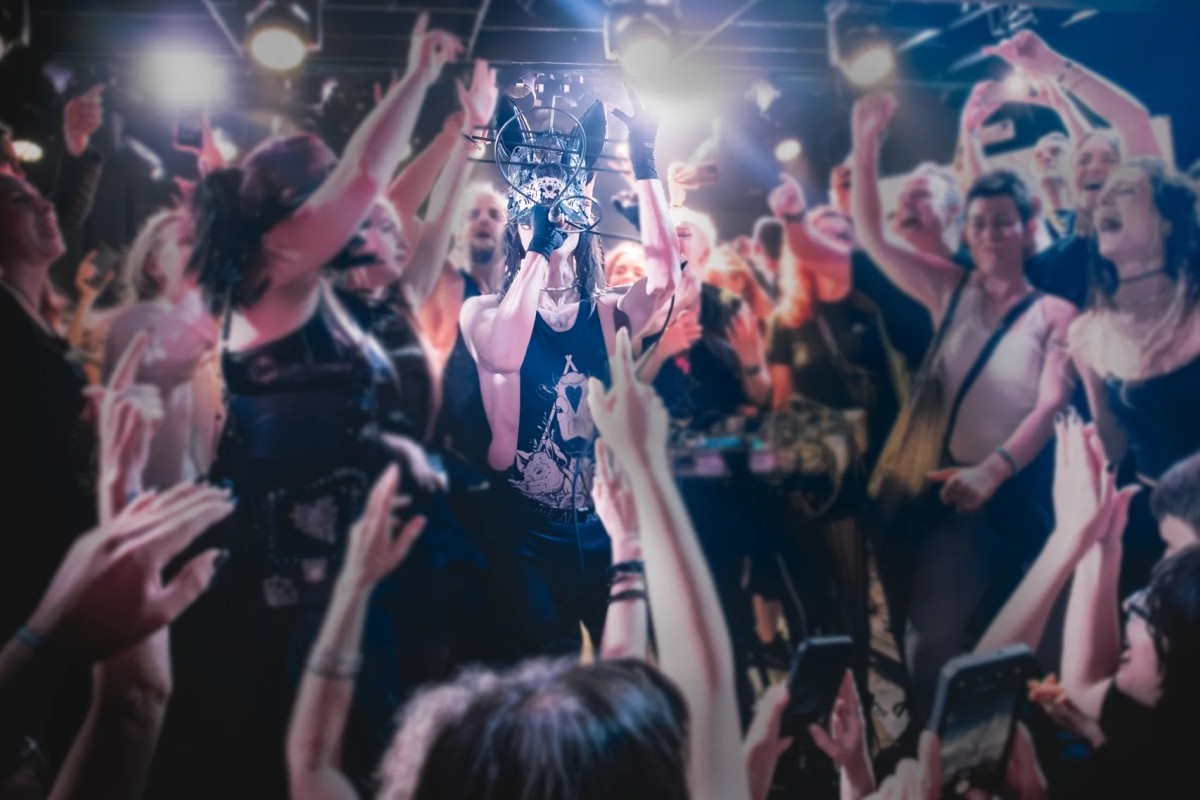
Chris: You'll have an extremely high‑energy performance of hyper‑stimulation, love and sex, sweat — everything you can imagine it'll be. Sometimes it's even more, and people can be overwhelmed by the live show because it's pretty intense. It's my kind of duty to provoke people and to make sure they feel something — to dance, cry, do whatever they feel. I do motivate them, because that's my purpose. You'll have a lot of hyper‑stimulation: intricate visual work with stage projections and lighting. It's very theatrical, very dark, and intense.
Jerneja: You've been remarkably open about insomnia, depression, and the psychological toll of creativity. Has that openness changed your relationship with your audience — and has it ever turned against you, and in what way?
Chris: It never turned against me. About ten years ago, I had a major psychological breakdown. I guess you'd call it my depression, insomnia, and extreme mental‑health problems, but I'm much better now. At the time, I really believed that maybe the music was the problem. Making art is a very challenging job. So I decided: OK, what is it that I want to do? What is my purpose? Two things were certain — I love making art, and I love my art to help people, you know? So I figured that the more public I could be about my problems or challenges, the more it might bring awareness, advocate for mental health, and open up a discussion. Everybody was very positive about it. I think it brought me closer to people. I think people are hungry for any form of authenticity, and I was lucky that my crowd are very intelligent, very thoughtful, conscientious, and they all supported it. They’re all very, very supportive, and that's what gave me the platform to talk more about it — and to keep talking about it. Music has always been like an open therapy to a certain degree, so I don't think it was a big surprise when I was public about it. At first, I was scared that people would get freaked out and not be able to talk about it. But it's been very good on all levels, and it's a beautiful thing.
Tomaz: You have a very devoted fan base — almost a family — and your Patreon community has become an important part of your artistic ecosystem. Has that in any way changed the way you work?
Chris: Hmmm, a little bit. I think it has changed in the sense that it's given me more confidence to continue being this freak. To know that I have that support, and that I can just keep experimenting — as long as I'm authentic in what I do, I can pretty much do anything. And that's a very lucky position to be in. I'm super grateful for that, because it's not an easy existence as a creative person. It's quite difficult to balance life and art at the same time. Patreon has really laid the foundation for a kind of support I never expected. It's without any strings — they don't expect anything specific, they just expect some content there. Some people even support without wanting anything at all, and it's just incredible. It changed the way I view the relationship between artist and fan; it became much more intimate than I ever expected. I grew up in this industry. I was very young when I started making music, and there were certain ways you were supposed to do things. Management kept you away from the fans, and you were "famous", but you couldn't actually connect with people. That always felt wrong to me. And now, this is just a pure connection between me and my audience.
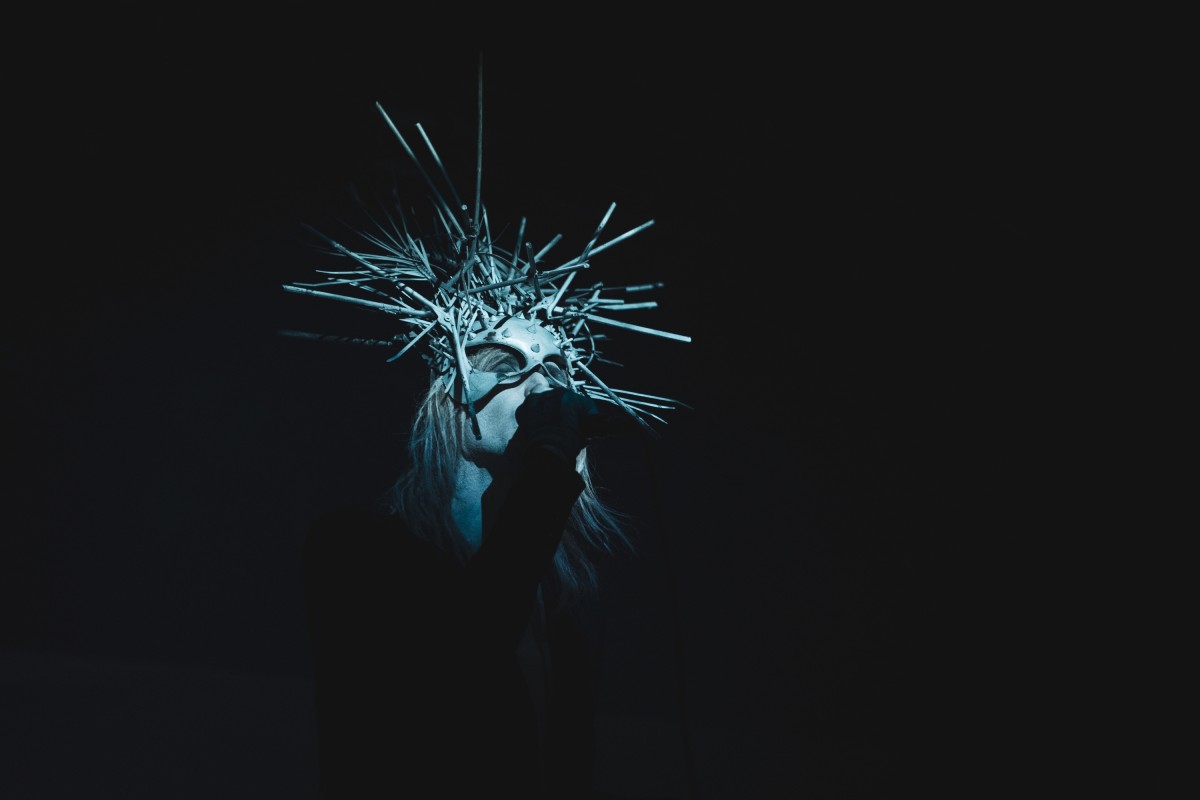
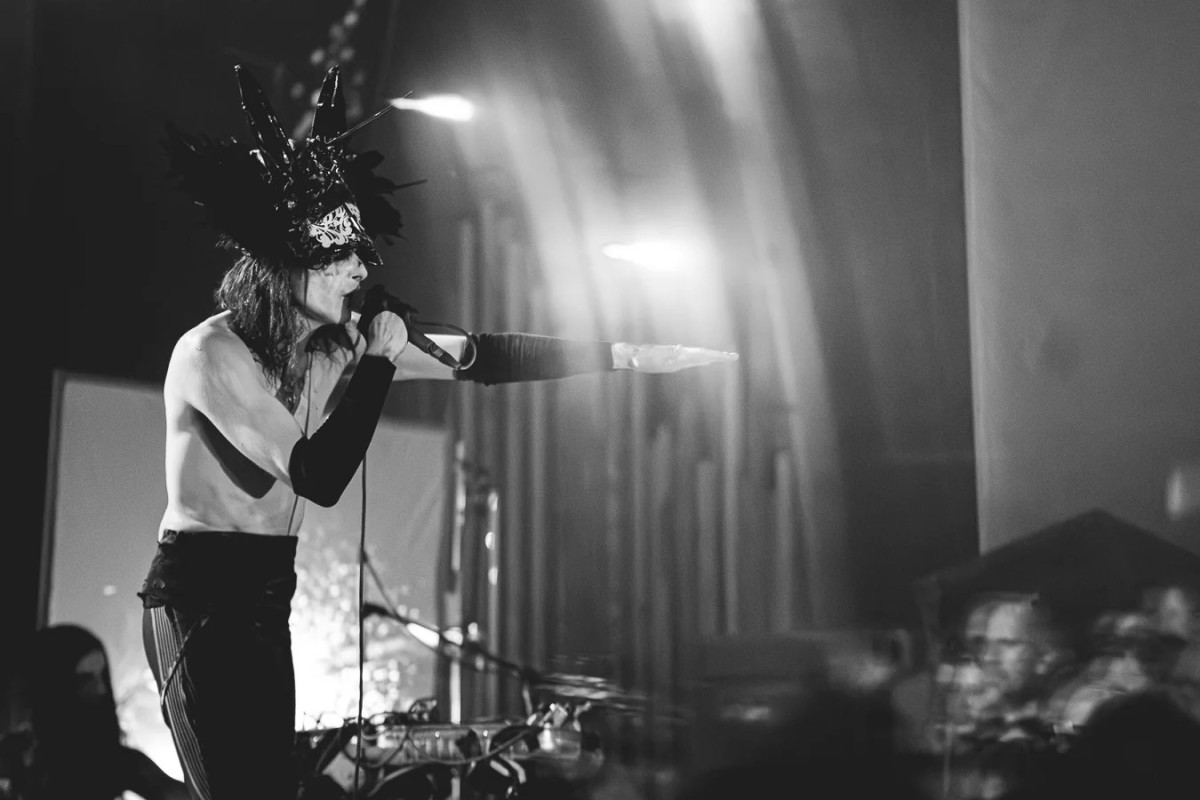
Tomaz: In your appearances — whether in photos, on stage, or in videos — you always wear some kind of mask or crown, whether it's made of feathers, latex, or something else. What does it actually represent, if anything?
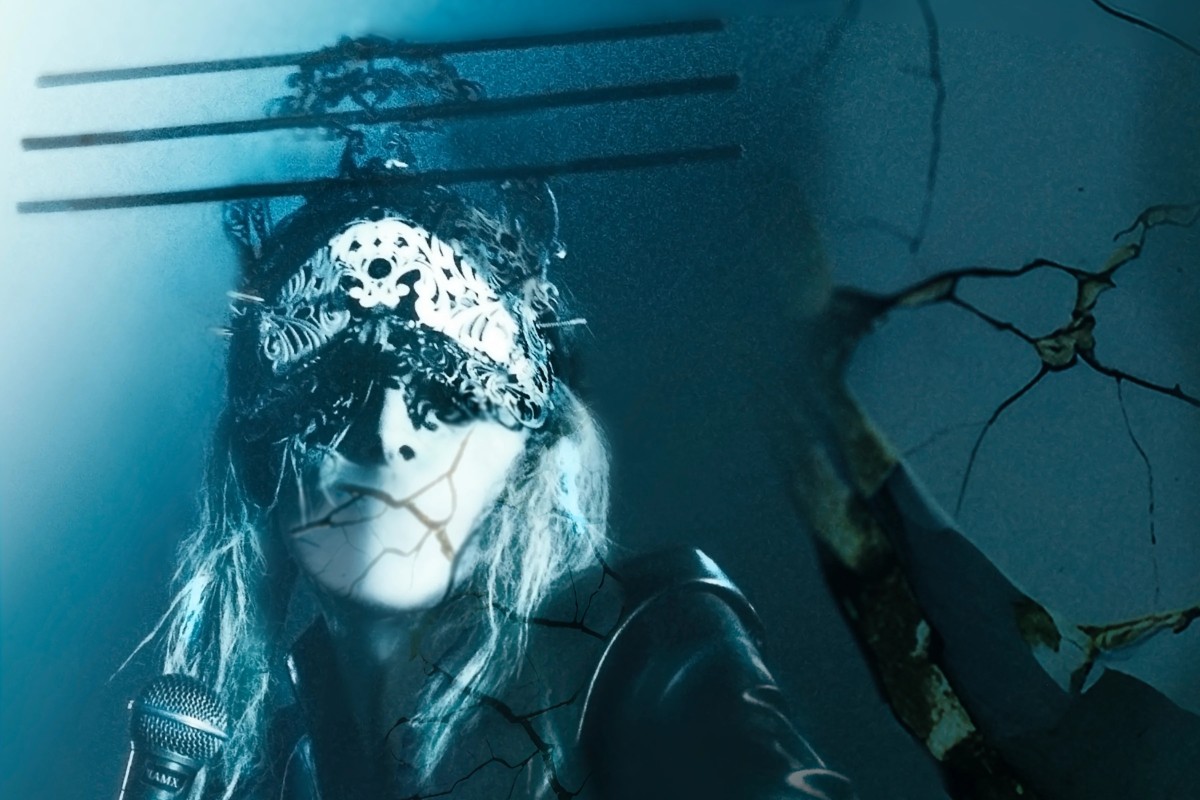
Chris: I think it represents a kind of theatrical shape. There's a symbolism to it. Being on stage feels like a magical experience, almost tribal, so the masks and shapes I create feel a bit like being in a tribal trance. Over the years, it's become something that occupies my energy, which is good before shows. I can play with it and make things — it's very creative, a lot of fun, and it keeps my mind focused. I love that kind of theatrical performance, and the masks get me into the psychology of it. I'm happy with my face — it's great — but I need to shift psychologically before I get on stage, and costumes, masks, things like that help me move into a different way of being. I require that, and it energises me. I guess this arthouse thing comes from a combination of passion, theatre, and tribalism. I've always loved that. Just my face and body on their own aren't enough for me. It needs to be more.
Tomaz: You’ve also collaborated with many other musicians. How do these collaborations — whether musical or visual — influence your creative direction?
Chris: I collaborate with people that I like, and it's not necessarily a musical decision. It often has more to do with personality. If I meet somebody and find them interesting and lovable, I don't need to love their music — though it's nice if I do. A lot of collaborations have come from meeting the right person at the right time. Sometimes they might contact me if they're interested in doing something, but I need to know them first. It's really about the person; that's more important than anything. Everybody has opinions about music, right? You might love something, I might hate something — I don't judge on that level anymore, to be honest. I used to judge people based on that, but I don't like that anymore. Now I just judge the person, which is more interesting to me. So collaborations come through that, and that's really it.
Tomaz: You recently collaborated with Lord Of The Lost on the track "What Have We Become"…
Chris: Well, they're very lovely people. Chris contacted me — he's liked IAMX for many years — and he was very humble, very gracious, and very flattering. So I got to know him a little bit, and then he sent me the track and asked if I'd consider doing something with it. I said that I loved it. It's not my kind of music — it's very different from what I usually do, which is interesting to me — so I decided to try it, even though I don't think they needed my voice, because they already had a great vocal on it. I don't think they needed it, but they wanted it, and I actually had a lot of fun performing it. It's different from what I usually do, a bit more intense, and I liked the way it pushed me into a different space that I don't usually go. It was a remote thing — we did it separately. I did it in my studio, and he sent me the track from his studio, because I live in America and Chris Harms lives in Germany. Yeah, I love the guys. They're great people.
Jerneja: You said earlier you lived a bit more secluded, surrounded by animals. Which ones — and what's it like sharing your days with them? Any especially good anecdotes?
Chris: I love them. I love humans, but it's so much mental work to navigate relationships, to do the right thing, to say the right thing. There's a certain simplicity and beauty in animals — it brings me so much joy just to observe them doing stupid things. Right now, I only have my cats — three black cats. At times, I had three dogs with me as well, but my ex‑wife has them now. I spent a lot of time just in the house or outside walking with the dogs. With the cats, it's different. I build lots of different spaces for them, because I'm very good at DIY — building things, making spaces, getting creative with where they'll go. I like that. I like seeing whether, if I create something, they’ll jump there and occupy that space. Will they like it? Will it make them feel good? It's an odd thing, because I talk to them a lot, and I sing to them. They like the singing, which is interesting — especially soft falsetto. It sounds a bit silly, but it gives me so much joy to be around them. It's difficult to explain. It's not something wildly unusual — it's very much just me and the kitties. I sleep in the bed, and they wake me up by sitting on my face in the morning, things like that. It's very lovely, very cuddly, and very different to IAMX. I think it grounds me, and it brings my mental focus onto something that isn't me, and that's a lovely thing. I don't like it when they get sick — when you have to think about mortality. I've lost quite a few animals in the last five years, and it's pretty hard, but it's worth it. It's beautiful to take care of them, to rescue them, so they're not on the streets. Yeah, I love it.
Jerneja: Because of the property where you live, I imagined you might also have horses, cattle, or something like that.
Chris: Oh yeah, my property is an ex‑ranch, so it used to have horses, but I don't have them myself. Maybe one day — but they're a lot of work. I don't know if I'd be able to go on tour and also have horses. I don't think I could do that.
Tomaz: You also had a property in Berlin. Is it still in your possession? I know it became some kind of studio or something. And I'm also curious — what was the decisive factor that made you move from Germany to California?
Chris: Two things: the weather and the mentality, I think. You know, it's a cultural mentality that I really needed at the time. I moved just after I had this psychological breakdown, and I needed to get out of Germany — to get out of Europe. I needed space. I needed to be somewhere where I could feel this openness. I'd spent a lot of time in America over the years, touring and working. California is just an incredible place for nature, weather, and the consistency of the weather. The winter months in Berlin are just too dark, and it was killing me. I just couldn't take it anymore. I had some friends in California, and I'd had a bit of success with IAMX in Los Angeles, so I decided to give it a go. I moved there, I sold the place in Berlin, and then I slowly found my way to the desert — the Mojave Desert in California — which is a whole other alien place. And that's where I am now.
Tomaz: Why the desert, and not, for example, a city like Los Angeles?
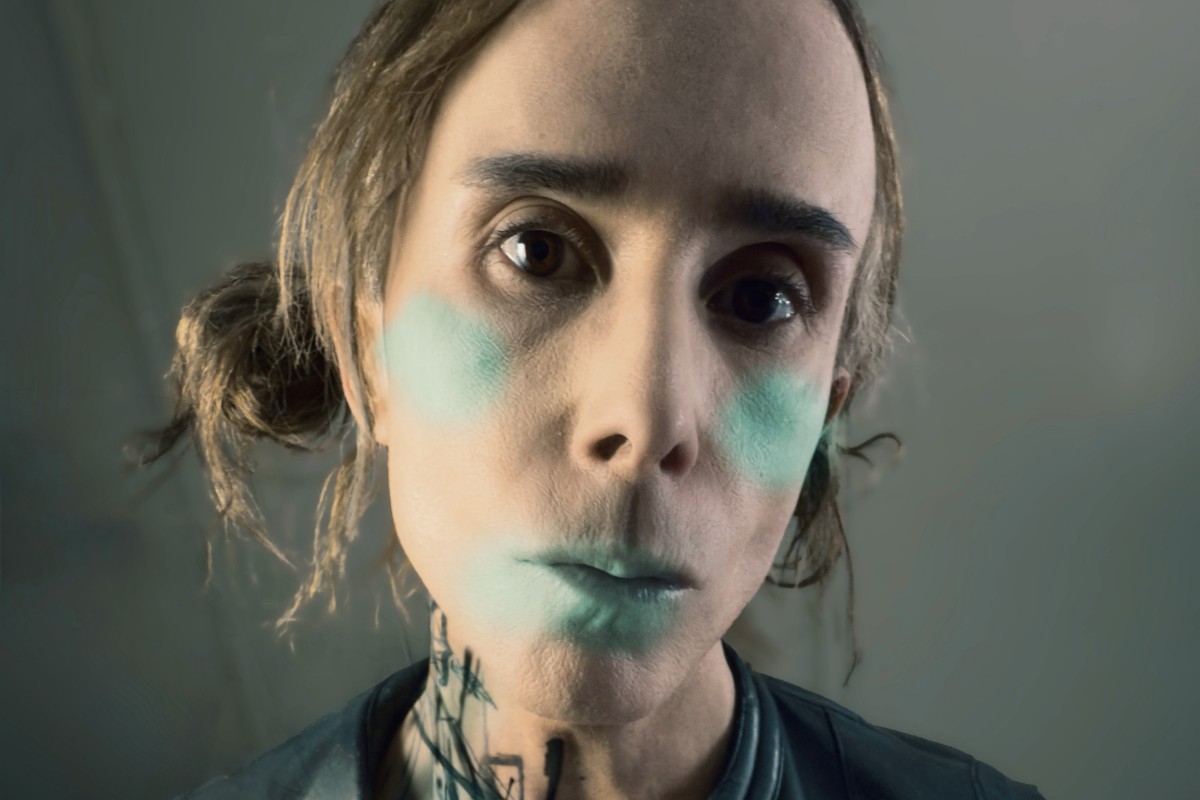
Chris: I think I just got tired of city life. I needed space. I wanted space. I wanted that feeling of being away from everything. It could be because of the autism — I'm autistic. Cities have so much stimulus: sounds, lights, people, so many things happening at once, and that can be quite destructive for mental health, at least for autistic people. I felt like I needed to find a retreat. I went to the desert on a trip, and I just fell in love with it. It's like an alien place — unlike anything I'd seen before — and I just felt at peace. And I wanted that peace every day, so I moved there. Now I do have that peace, every day, but I also have the option to go on the road, to tour, to play in crazy clubs. I need both to feel whole, for sure.
Jerneja: The Berlin‑era albums were steeped in decadence, politics, and psychological tension. Do you ever revisit that energy intentionally, or do you prefer to leave past versions of yourself behind?
Chris: I think I probably do like to leave things behind. I hardly ever think about the past unless I have to. Sometimes something pops up, and I realise, "Oh, that was me". I didn't even realise it at the time, and it's interesting to see myself doing that thing — but I don't really feel connected to that person. In some ways I do, and in some ways I don't. I like to move. I like to keep moving. I like progress, I like change. I also don't like change — autistically — but in terms of my career and music, I like to keep things moving, and I don't worry about the past. I don't even listen to what I did in the past, ever, hardly. I'm focused on creation — that's my job. I want to give people new things, and I love exploring new things. That's more important than what I did in the past. You know, it's all in me anyway, because I've listened to that music and done those things a thousand times. It's part of my DNA, so I don't need to think about it. If it comes up, it's there — like, for example, I don't need to remember a lyric from ten years ago; it's all in there. I like to keep going forward.
Tomaz: And then California brought a very different chapter — recovery, clarity, reinvention. Do you think place changes the artist, or does the artist simply project their inner world onto wherever they are?
Chris: I think the environment changes the inner world. It will affect the art. But I was always looking for a place where I could be at peace, or at least free enough to think clearly — and that shows in the creativity. Sometimes it can be useful to be unhappy, stressed, unhealthy; it can create interesting things. But I think an artist should be in a stable place to truly express himself. At least that's how I feel, and that's what being here has given me. I can see a difference between what I was doing then and what I've done since moving here. I think you're right — there's more clarity, mainly because I know myself better. I've had the time to fully align myself with my creativity and my values. Being here has given me that clarity.
Tomaz: Some of your tracks have also been used in TV series, films, and video games. Were those tracks made intentionally for that purpose, or were they selected later?
Chris: They were selected later. Sometimes a person or a company will come to me and ask if they can take a track, remix it a little, or if I can do this or that with it. But generally, I don't intentionally work for film or TV. At least 99% of the time, people just contact me and ask if they can use the music. I did do some scoring — some film work — many years ago, but I didn't like it. I don't like the work process; it's too strict. I like creating music for visuals, but not for somebody else's visuals. I don't find that satisfying. Still, if they like it, and if they think it fits — you know, like the songs you might know from How to Get Away with Murder and other TV shows — they used a lot of IAMX music, and that's great. But I wasn't going to change it for that. They chose it because it already carried the meaning they wanted for their work. So yeah.
Jerneja: So they just pay for using the tracks, and that's it.
Chris: Yes! That's the best situation there can be.
Tomaz: Before you formed IAMX, you played in the band Sneaker Pimps. Have you thought about reforming the band to make something new? Maybe even playing some shows?
Chris: I would like to, but those people are just as fucking weird as I am. It's very difficult to get us together and organise it in a way that could actually work. I think it's impossible, I'd say. Liam Howe — the other main member — basically, Liam and I did pretty much everything. We're like brothers, or husband and wife; it's a weird relationship. He's fucking screwed up, and I'm screwed up, and I don't know how to get us together. It's just too difficult. It's easier for me to work by myself. Sometimes he'll say, "Hey, let's do this thing", and I'll go, "Yeah, let's do it", but it never happens, haha. We did manage to make a new album about five years ago, but to be truthful, we managed it because of Covid — it gave us the time. Right now, I don't think anything is going to happen. The work isn't the problem; the problem is the psychological pain of being together.
Tomaz: Before we end the interview, I'd like to ask how much you follow recent events in the world — the wars, politics… You know what I mean.
Chris: I see it like everybody else. I'm not a political activist. I can be more productive by making art. It's such a sticky subject — everybody has such strong opinions, and the world is so divided. It's easy to say what's wrong, what's right, what's fucked up. I think we all know what's wrong, but what to do about it is difficult. I take comfort in my art, my work, my close relationships, and my fans. These are the things I can control. America seems completely fucked up — you've got Trump, you've got the left, you've got the right, and everybody's fucking crazy. From the outside, it looks like a fascist state, all that kind of stuff. But then, on a daily basis, when I go to the local store, everybody is really nice. I just like to focus on a smaller world. It's not hiding — I think it's realistic. The internet has given us access to everything, and everything seems fucked up all the time. We're all panicking all the time, and there are so many bad things happening constantly. But if you actually look at the research and the statistics on how humans have progressed, things are getting better. It might not seem like it because there are wars happening, but generally, crime is going down, poverty too, people are less sick… It's difficult to handle it all. So I’m just trying to do what I can in my smaller world. When I'm in Eastern Europe, and I come into closer contact with what's going on there, I try to be conscientious about it. I actually performed in Ukraine, for instance. IAMX went there just when the war broke out — we snuck into the country and played a show. We were one of two bands that managed to play, and then we left. It's difficult, and I don't go too deeply into the politics of it because it's dangerous.
Jerneja: By the way… do you know that your First Lady, Melania, is of Slovenian origin?
Chris: She is, right? Oh my god, yes — that's true. How does that make you feel?
Jerneja: I don't feel anything about this; I don't care.
Chris: That's good, yeah. You do what you can, and you try to focus on the things you focus on — and control what you can control. It feels like we're constantly being stimulated by things that are completely out of our control, and that's very psychologically damaging. You need a very good mental filter to live in the modern world. I just try to filter things and do what I do. I'm not going any further into it.
Tomaz: There's also a big impact from social media, the news, and so on. It seems like some people feed their egos on the fear of others. It paints a picture that everything is catastrophic — like it's never been this bad. The left blames the right, the right blames the left, and people are more and more divided. And then you have so many so‑called influencers, each spreading their "truth" as if it were an axiom…
Chris: It's frustrating. There are a billion opinions, right? You have to understand that it's a bit of a game. They're using rage and hate to create money and power. One of the most powerful things you can do is switch off. They know what they're doing. They're advised to rage‑bait. Trump knows what he's doing. They have very powerful, intelligent people advising them.
Jerneja: At least we have music. Thank you, Chris, for the interview — and if you have any final words you'd like to share with your listeners, fans, and those who'll be reading this, feel free to share them.
Chris: I'm just very grateful — and thank you for giving a shit. Try to be your best self. Come to our show, and maybe you'll enjoy something. Maybe you'll love me, maybe you'll hate me — who knows. I can't control those things. I do send positivity and love out there.
IAMX links: Official Website, Facebook, Instagram, YouTube, Patreon, Bandcamp
 "You can see it in social media, in the world, with the wars going on, and I think it's an appropriate title for an album." - Skinny Disco
 "Goth people want to have fun sometimes too. I guess if your listening time is 99% dark, sad songs or evil black metal songs, sometimes you want 1% joy, and here I come." - Franck Hueso
 "When I make a song, I know I could do it better, but I'm happy with it. It doesn't have to be perfect, and I like it when it's not. That's why I can make it that way." - Rapha Hell
 "When I found the goth scene and the music and everything around it, I slowly started to find my true self again. I'm fascinated by Satanism - not because I worship Satan..." - Gözde Duzer