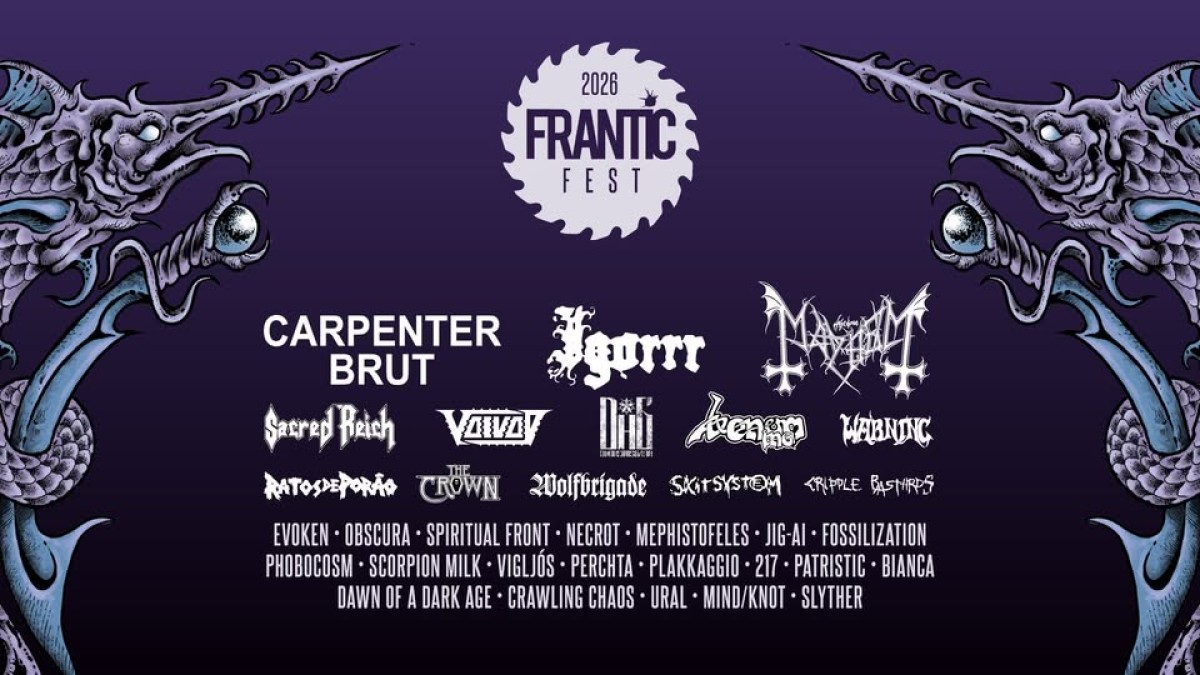
Frantic Fest is a relatively new festival, founded in 2017 in Francavilla al Mare, Abruzzo. That makes it a young event by European metal standards, yet one that has grown rapidly and is now regarded as a major Italian extreme‑music open‑air gathering. Held at Tikitaka Village, directly on the Adriatic coast, its two stages present a predominantly black metal, death metal, doom, grindcore, hardcore, experimental and avant‑garde line‑up, with the occasional stylistic outlier.
The festival, held from 13 to 15 August, marked its ninth edition this year (with 2020 cancelled due to the pandemic), and it was our first time attending — almost by accident. We had originally planned to be at Brutal Assault the week before, but other commitments forced us to abandon that idea. We would once again like to thank the organisers for the accreditations and the bands for approving interviews. When that plan fell through roughly two weeks before the event, Tomaz suggested Frantic Fest instead. It wasn't so much the line‑up that convinced us, as most bands fall outside Terra Relicta's dark music orientation, but rather the proximity of the sea. Frantic Fest is one of the very few festivals within our musical interests where festival‑goers genuinely swim. Most European seaside festivals sit by cold or windy coastlines where the sea serves more as scenery than an actual swimming option.
Thursday, 13 August:
We set off at twenty minutes to six in the morning, having slept barely four hours, and already running an hour behind schedule. Even so, with several stops along the way, we reached the festival site shortly after 1 p.m. The drive was pleasant, free of any traffic issues, and surrounded by beautiful panoramas. When we arrived at the festival grounds, quite a few people were already there, along with several tents pitched in the designated camping area. The spot, however, didn't appeal to us at all — small, completely exposed, with no shade whatsoever, and with the added inconvenience of not being allowed to drive in, meaning the car had to be left at a not‑exactly‑nearby car park. The decision not to camp there was made instantly. There was no need for panic, as the surrounding area is dotted with campsites; time, however, was pressing, since we had an interview with Perchta scheduled for 16:30. They were under even greater time pressure, needing to leave immediately after their 18:00 performance to head to Summer Breeze.
We refreshed ourselves with a quick can of cold beer and set off to find a campsite, deciding to check them in order, starting with the nearest along the road. The first two or three were in "siesta mode", with no one in sight. Our search eventually led us towards the small town of Ortona, to a campsite on a hill just above the sea. It was at least ten kilometres from Tikitaka Village, but crucially — it was open. By that point, we had already cancelled the Perchta interview — hopefully to be arranged through another channel — and simply wanted to pitch the tent and get something to eat before arriving in time for their concert and everything that followed on that first festival day.
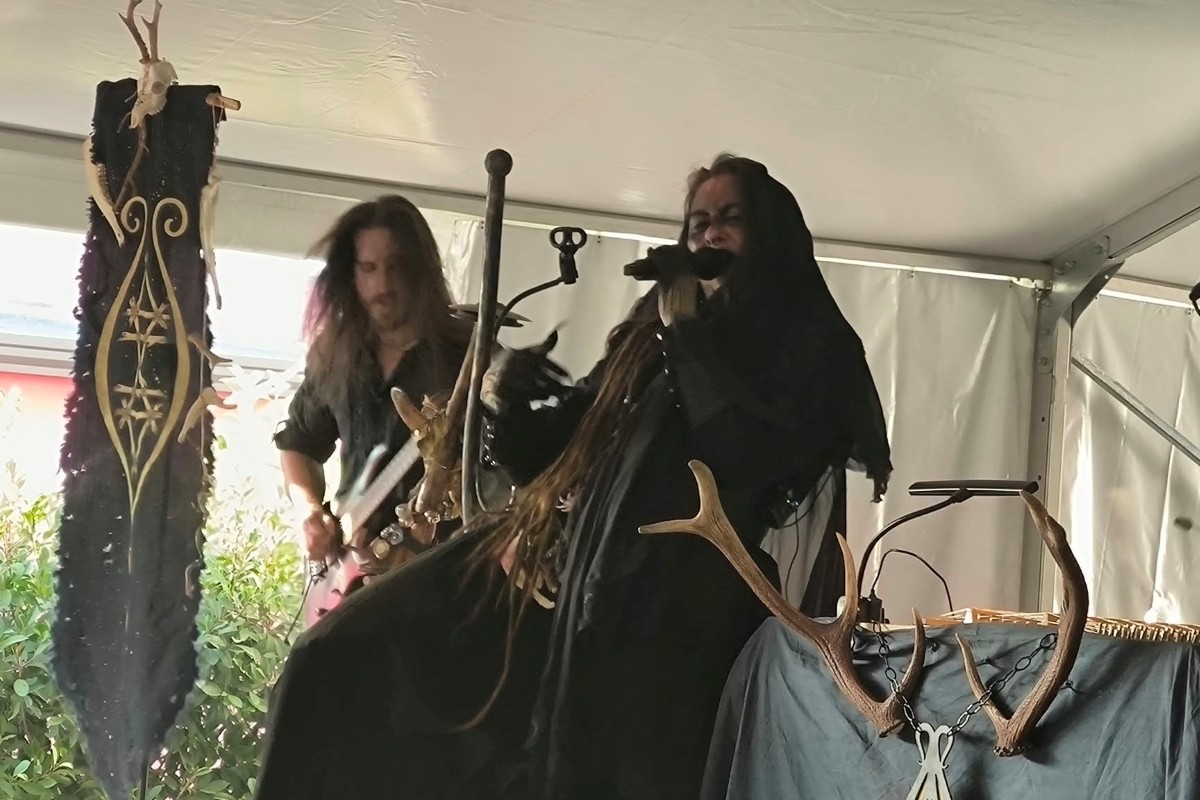
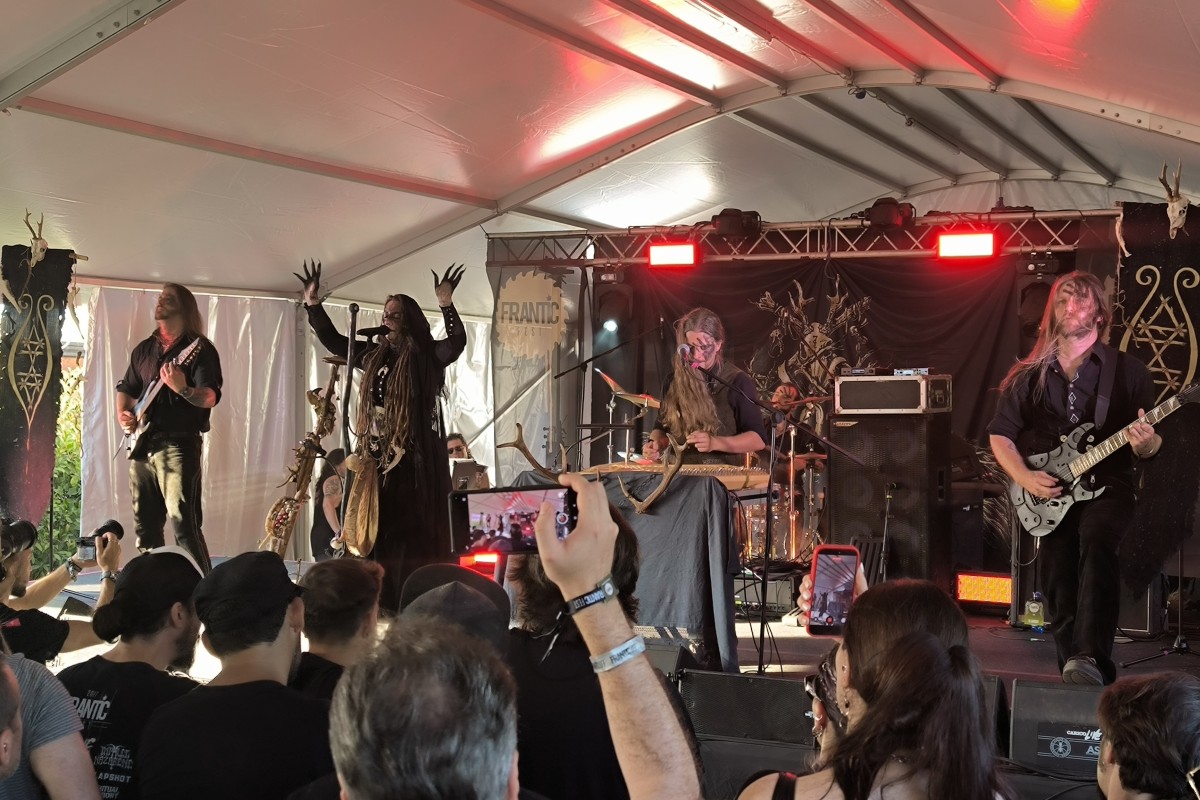
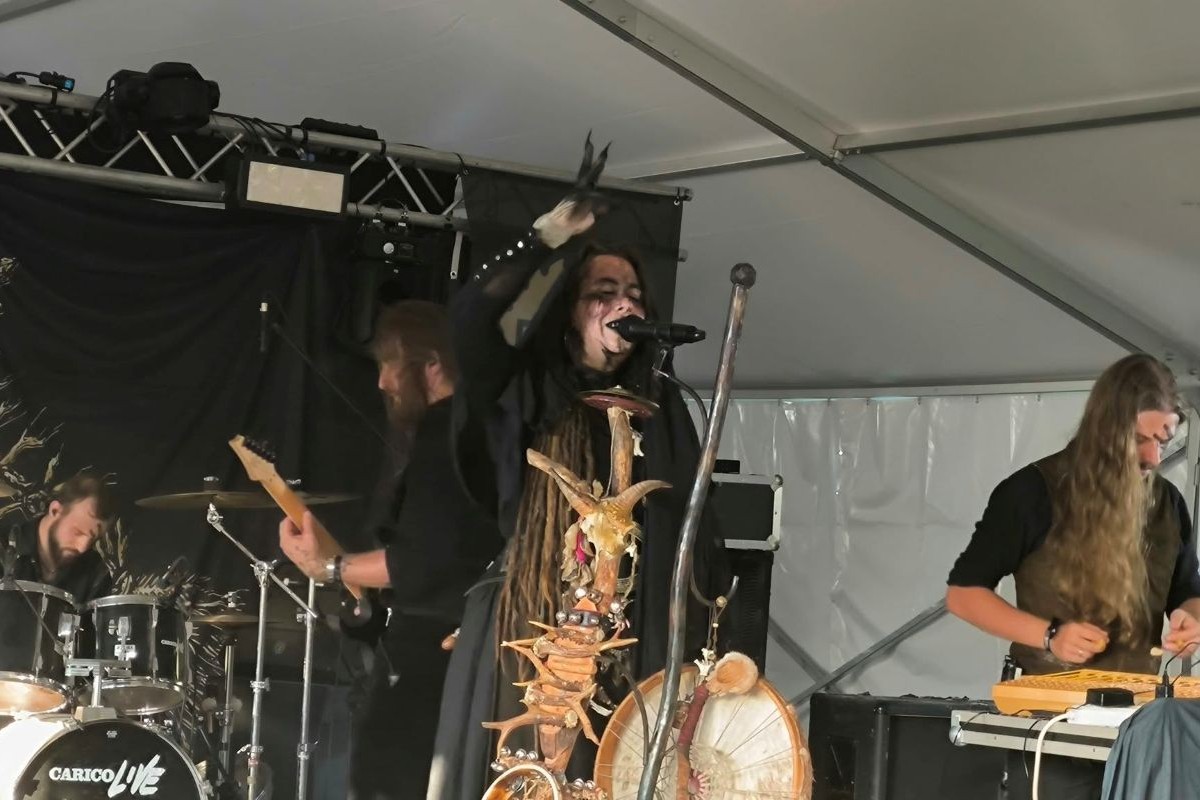
We managed to reach the festival grounds just before Austrian atmospheric black/folk‑metal outfit Perchta took over the Tent Stage at 18:25 with "Ois wås ma san", and of course we enjoyed every minute of their half‑hour performance. If this had been my first time seeing Perchta live, I'd say it was excellent — but I can't, because their appearance at Prophecy Fest two years ago was incomparably stronger. And that has nothing to do with Perchta themselves; it was simply the ambience and the timing. Perchta's music is of high quality on its own, yet its live manifestation adds a new, invaluable dimension. In broad daylight, when the entire light show is rendered almost meaningless, much of Perchta's mystique dissipates — and the cave is undoubtedly a more native environment for them. The band played seven songs: four from their debut album Ufång, released in April 2020, and three from their sophomore record D'Muata, which turned two this June. I think that, once again, "Vom Verlång" and "Hebamm" — the latter closing the set — were the stars of the "evening". I do hope I'll see them again in more fitting conditions, perhaps on a woodland stage, under the thick, breathless dark of a moonless night.
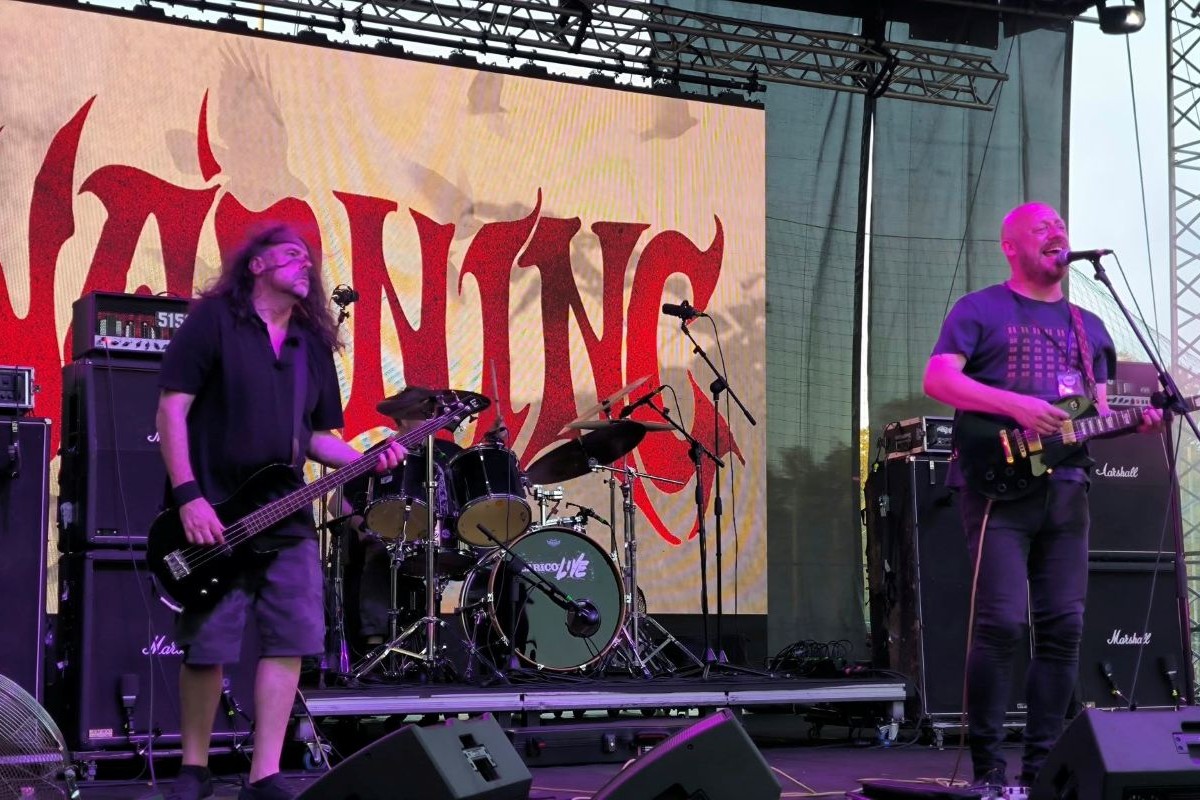
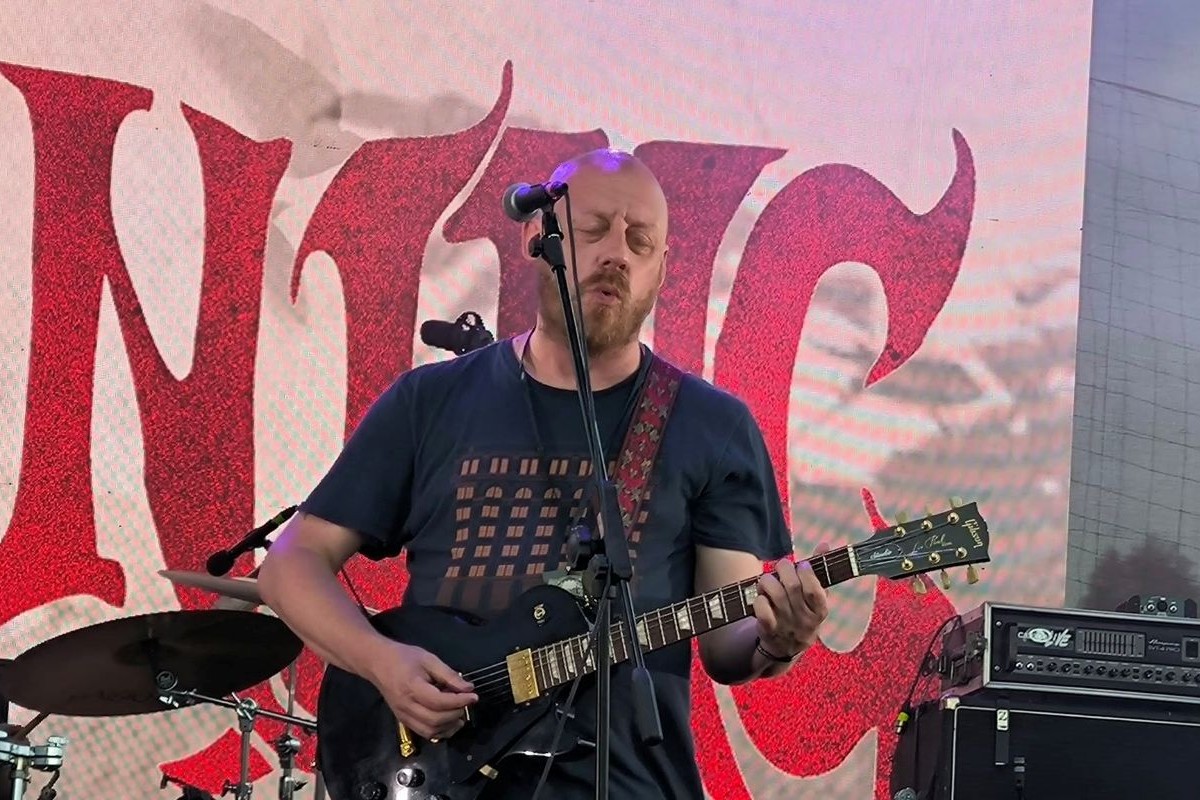
We moved quickly to the Main Stage, as UK doom metal stalwarts Warning began their set just five minutes after Perchta finished. For both Tomaz and me, it was our first time seeing them live — but what can one really say about a band that emerged back in 1994, has only three studio albums to its name (the group disbanded in 2009, briefly returned for select performances in 2017–2018, and re‑emerged again in recent years), and whose second record, Watching From A Distance (2006), remains one of the most important doom albums of the 2000s? In their fifty‑minute slot, the band played just five songs — entirely in keeping with the doom metal genre — with the shortest, "Footprints", stretching beyond seven and a half minutes. They opened with "Stations", and later moved into "Night Comes Down" and "Teacher", honouring their freshly released album Rituals Of Shame, out in June via Relapse Records. They closed their set with the epic, slow‑burning "Watching From A Distance". A sizeable crowd gathered beneath the stage, standing more or less motionless — again, perfectly in line with the doom metal genre, and above all with the unbearable heat that stubbornly lingered. Personally, I would have taken more from the performance had it been cooler, darker, and had I been able to sit somewhere with good sound and a clear view of the stage. That remains the ideal way for me to take in doom performances — and I've only experienced it once so far. Still, Warning kept their performance consistently professional, even in its utter simplicity — with no props, projections, or embellishments of any kind. There was little interaction with the audience, though vocalist and guitarist Patrick Walker did mention being delighted by the local beach, saying he had spent the day drinking cocktails and floating in the sea.
We skipped the thrash metal legends Sacred Reich and returned to the Tent Stage, where at 22:10 the Italian, genre‑defying — yet certainly non‑metal — Spiritual Front began their set. From the very first note it was clear that this would be a highly energetic performance. A surprisingly large crowd of predominantly metal listeners — at a festival devoted almost entirely to metal — unmistakably enjoyed their show. Over the course of their hour‑long performance, the band presented a selection drawn largely from their seminal album Armageddon Gigolo — unsurprising, given that the record marked its twentieth anniversary this June. As is often the case, the elegantly black‑clad trio opened with "The Shining Circle", a song whose rhythms place you squarely on the back of a horse leisurely riding across the Wild West. The ensemble's central figure, Simone Salvatori, energetically wielded his black acoustic guitar, shaping graceful movements that — together with his wide black trousers — created the impression that he was rippling across the stage. This refined interplay of music and striking physicality, accompanied by excerpts from Pasolini's Mamma Roma (1962) projected on the screen behind them, briefly evoked a sense of being suspended somewhere between past and present, here and elsewhere. It was a joy to observe Simone's theatrical facial expressions, which added the final flourish to the entire performance. With "Jesus Died In Las Vegas", Simone recalled the band's appearance at the very first edition of the festival back in 2017, transforming the chorus into "Jesus Died In Francavilla". I must also mention "I Walk the (Dead)line", one of my personal favourites from the Spiritual Front repertoire, as well as the closing piece, "Children Of The Black Light" from the album Amour Braque (2018). For this final song, Simone set aside his guitar and moved to the drums, extending the piece with a vigorous, almost march‑like rhythmic flourish. To avoid stretching this section too far — and because much more will be revealed in the forthcoming interview we conducted with Simone the following day — I will simply conclude in true Italian fashion: "Spettacolo!"
Just five minutes later, Carpenter Brut — one of this year's main attractions and the final act of the day on the Main Stage — took over. We had seen their show a little over a year ago at Castle Party Festival, where we also interviewed Franck (if you missed it, you can still find it HERE), so we had a fairly good sense of what awaited us: Franck Hueso behind his imposing, meticulously assembled synthesiser setup, flanked by guitarist Adrien Grousset and drummer Florent Marcadet, both from progressive‑metal outfit Hacride. What followed was their trademark audiovisual assault — a rapid‑fire surge of retro‑futuristic imagery steeped in 1980s slasher aesthetics, dark synthwave, electro‑industrial, EBM and metal‑tinged electronics. Neon cityscapes, VHS grit, occult symbols and flashes of hyper‑stylised violence tore past like feverish fragments of exploitation cinema. They opened with "Major Threat" and "Leather Temple " from their latest album Leather Temple (2026), the final instalment of what one might call the "Leather T…" trilogy. Classics were, of course, not omitted: "Le Perv", "Roller Mobster", "Turbo Killer", "Maniac (Michael Sembello cover)", and — given that we were in Italy — the wonderfully fitting "Disco Zombi Italia". The concert's momentum occasionally faltered due to rather long pauses between songs, while the pre‑recorded audience addresses — at least for me — could easily have been left out. You either address the crowd personally or you don't; a robotic voiceover is neither fish nor fowl. And although the sizeable audience appeared thoroughly enthusiastic, almost euphoric, this particular performance didn't resonate with me as strongly as their previous one — though perhaps that was simply the fatigue of a long day.
Shortly before half past midnight, activity around the Main Stage came to a halt; the Tent Stage, however, still had one final act to offer — the Swiss black metal band Vígljós — followed by the inevitable afterparty. Although their brand of raw, rustic black metal isn't exactly our cup of tea, we stopped by for a couple of songs. The four enigmatic musicians — who emerged only three years ago — appeared in ritualistic attire reminiscent of pre‑Christian agrarian traditions: pale linen robes tied with cord, faces concealed by circular wicker masks, and one towering headpiece fashioned from bundled straw. The ensemble evoked imagery of ancient beekeepers or harvest rites — austere, organic, and deeply symbolic — while delivering their trademark shrieking old‑school black metal infused with touches of DSBM and folk. Two songs of relentless screaming and ultra‑fast instrumentation were enough for us, especially since we could hardly wait to return to the camp and finally get some proper sleep. Although sleep isn't exactly a demanding endeavour, getting some proved easier said than done.
Friday, 14 August:
After barely four hours of rest, Frantic Fest was abruptly followed by "Formica Fest". At half past six in the morning, Tomaz shook me out of a deep sleep, insisting that we were under attack by ants — formica being the Italian word for "ant". The sleeping area of the tent was crawling with hundreds, if not thousands, of minuscule dark‑grey specks — most likely a local species known for entering tents, houses and other enclosed spaces in search of moisture rather than food. Still half asleep, I suggested we deal with the situation later, but Tomaz insisted we leave immediately, claiming the ants were biting him. And so we got up — the first people awake in the entire campsite, like two proverbially "diligent Slovenians", for crying out loud.
The women's restroom turned out to be the second stage of Formica Fest; suddenly I was seeing ants everywhere. We waited until eight o'clock, when the campsite bar and shop finally opened. There, Tomaz learned that ants are an everyday occurrence in this area and bought some sort of ant‑repellent powder — admittedly a case of shutting the stable door after the horse has bolted, but it was the only thing they had — and circled the tent with it. Afterwards we headed to the beach: a beautiful stretch of sand beneath cliffs, scattered with rocks that had once fallen into the sea. We swam a little and slept through most of the day. Returning to the tent in the late afternoon, we discovered that the ants trapped inside had died — most likely from a mix of panic and dehydration after being unable to find a way out. All those unnecessary deaths could have been avoided had someone warned us about the ant invasions earlier; we would have used the powder the moment we pitched the tent. At least we now know how to handle camping in areas where ants are fond of gathering. By nine in the evening we were back at the festival grounds for our scheduled interview with Spiritual Front's frontman, Simone Salvatori. We barely recognised him at first — we hadn't expected him in a metal outfit. Finding a quiet spot proved impossible, so we settled at a table near the Tent Stage, surrounded by chatter from nearby benches and accompanied by the Canadian progressive/thrash legends Voivod. It still seems almost impossible that anything intelligible came out on the recording, yet it did, and the interview will be published later this week. We then wandered around for a good hour, waiting for Igorrr — the project of French musician Gautier Serre, known for fusing black metal, baroque, breakcore and trip hop into a singular, unclassifiable sound. At this point, I hand the narrative over to Tomaz — simply because I can: "I won't waste too many words describing the band itself, as most of you likely know what Igorrr represent in the sphere of modern metal today. Their blending of every imaginable style has never particularly impressed me, aside from the occasional symphonic or classical passages, which are, of course, in a class of their own. At Frantic Fest they appeared with a slightly renewed line‑up, as the role of mezzo‑soprano is now taken by the German opera singer Gerda Iguchi. What they delivered live was honestly not what I expected, because the performance — even if you're not a fan — is utterly otherworldly and pulls you in whether you like it or not. Although one can easily get lost among all these genre entanglements, watching and listening to Igorrr live somehow makes everything fall into place. Excellent choreography, strong lighting effects, good sound, and the stage design all contribute to experiencing a band like Igorrr properly. As anticipated, the moments that impressed me most were those when Igorrr sail into symphonic, baroque, and classical waters. That's when the outstanding vocalist Gerda steps forward, and not only with her voice — her movements and various costume changes quite literally take over the stage. On the other hand, JB Le Bail — with his inhuman screams and growls — is her complete opposite. His performance is nothing short of feral. At times they even reminded me of Therion, but only briefly, as Igorrr soon strike with relentless death metal, veer into breakcore, toy with progressive metal, avant‑garde, industrial, ambient, and more. The band's mastermind, Gautier Serre, is remarkable: one moment he's on guitar, the next he's at the keyboards and synths, and then he's already pounding the drums. It's incredible what this man is capable of, all while entertaining the audience with various gestures. Igorrr played around fifteen songs, drawn from their last three albums — Savage Sinusoid (2017), Spirituality And Distortion (2020), and Amen (2025) — completely skipping the first two records. Their performance certainly impressed me, though it didn't convert me into a fan; this kind of musical mixture still doesn't appeal to me when listened to 'dry', as it's simply too 'out of this world'. But from now on, I do appreciate them as excellent musicians".
The final performance on the Tent Stage (Jig‑AI), as well as the afterparty, we skipped once again; all we wanted at that point was something to eat and, of course, sleep. There wasn't much choice for us that day: pizza was off the table, as we'd already had it the previous evening, and the only thing left was a vegan food truck. So, for the first time in our lives, we tried a vegan burger — surprisingly tasty, but at least half too small for €11. Then again, we're already used to the usual food‑and‑drink price gouging at festivals, and I do sometimes wonder — rhetorically, of course — how far it will go.
Saturday, 15 August:
We spent most of Saturday on the beach as well, since the majority of bands on this final festival day weren't to our taste — nor particularly relevant to Terra Relicta. At 21:00 we were scheduled to interview Attila Csihar of the legendary black metal outfit Mayhem, but before that we wanted to catch the US funeral doom/death metal icons Evoken at 20:05 on the Tent Stage. With the best logistics we still managed to miss their first song — or, by funeral doom standards, roughly a quarter of their forty‑minute set. And it was all because of Mary, the mother of Jesus. The 15th of August is the Feast of the Assumption, celebrated by Catholics and several other branches of Christianity, and just as we were heading towards the festival grounds, the local mass must have ended, creating a queue of cars. Hence the delay. According to the band's setlist, only three songs were listed for that evening: "Matins" from their latest album Mendacium (October 2025), the combined "In Pestilence" and "Burning" (from Quietus, 2001), and "Antithesis Of Light" from the 2005 album of the same name. However, I'm fairly sure one track was missing from the list — though I couldn't say which — as these three don't add up to forty minutes, and I distinctly remember us witnessing three full songs. Anyway, they brought a sense of calm to the stage — not a blessed calm, though, as the atmosphere suddenly grew heavy and time seemed to slow almost to a halt. There was no noteworthy interaction with the audience, nor much movement from the crowd (how could there be), so there isn't much more to add — except a word of praise for an excellently executed performance.
The interview with Attila almost fell through, as we simply couldn't find each other. Fortunately, we ran into one of the organisers just in time, and he led us backstage at the Main Stage, where Attila, in the company of another person, was casually sipping a beer. We sat down a little further away and began a conversation that drifted into, to put it mildly, rather strange waters — but it was certainly something special, so you can look forward to it with some anticipation.
At 23:15 Mayhem took over the stage — the opening felt vaguely religious, perhaps in honour of the holiday. Or perhaps not. In any case, when Attila, the last to take the stage, appeared in a high‑priest‑like ceremonial garb, a different kind of mass began. More on that from Tomaz: "It was time for the festival's 'stars', the cult Mayhem. I'm almost embarrassed to admit that this was the first time I had ever seen them live, despite having had several opportunities in the past. Perhaps it was due to my rather foolish belief that Mayhem without Euronymous simply couldn't be what they were meant to be — and I couldn't have been more wrong. From the very beginning of the set right through to the surprises at the end, Mayhem delivered an exceptionally strong performance. With Attila Csihar at the helm — a living black metal legend — founding member Necrobutcher on bass, the equally legendary Hellhammer on drums, and Teloch and Ghul on guitars, Mayhem created something special, almost epic. This is not the underground black metal they helped forge, at least not in the way we understand it today. Far from it: Mayhem create theatre on stage. Much of that comes down to Attila, who, with his costumes, facial expressions, movements, and of course his utterly unique vocals, conjures a genuinely surreal experience. Thanks to the visual backdrop and everything they recreate live, Mayhem feel even more atmospheric and mystical in person, and aside from Attila, they don't come across as particularly diabolical or dangerous. They performed fifteen songs spanning all eras, opening — naturally — with the excellent 'Realm Of Endless Misery' from this year's album Liturgy Of Death, followed immediately by 'Buried By Time And Dust' from their debut and cornerstone black metal record De Mysteriis Dom Sathanas. The emphasis lay primarily on these two albums, but Mayhem also offered two tracks from the more experimental Grand Declaration Of War ('To Daimonion', 'View From Nihil'), both of which work brilliantly live, as well as the title track from Chimera, 'Psywar' from Esoteric Warfare, the superbly executed 'Ancient Skin' from Wolf’s Lair Abyss, and a striking finale with 'Deathcrush', 'Chainsaw Gutsfuck', 'Carnage', and 'Pure Fucking Armageddon' — all from their earliest period, 1986/1987, the songs found on the cult demo recordings Pure Fucking Armageddon and Deathcrush. The crowd was ecstatic and almost entranced, especially during songs such as 'Freezing Moon' and 'From The Dark Past', and it's no surprise that by the end of the set we were all left wanting more. The stage projections matched the sonic atmosphere astonishingly well, and during the final four songs mentioned above, the screen displayed old photographs of former and deceased members of the band — a beautifully crafted tribute to the past and to the individuals who helped shape both Mayhem and black metal itself. An exceptional, immersive and flawless performance".
On the final day, we did at last manage to attend the after‑party. Beneath the small outdoor stage set up in front of the bar — on which DJ Il Vescovo, dressed in what looked like a white biohazard‑style suit, was enthusiastically rolling out track after track — a sizeable crowd had gathered, dancing, jumping and cheering every time a particularly beloved song appeared. The selection was wildly varied: from Sepultura's "Roots Bloody Roots" to Sex Pistols, Rammstein, Extize, 80s hits, Metallica…
After roughly an hour of listening, accompanied by a Frantic Spritz, we said our goodbyes to Frantic Fest for this year — a festival that left us with genuinely fond memories. Not so much because of the music, since, as already mentioned, there weren't many bands that aligned with our interests, but primarily because of the location. There are few things lovelier than spending your days by the sea and your nights with good music. If we manage to secure accreditations again, we will certainly return — better organised and with an apartment rented somewhere nearby. All the more gladly if future line‑ups include a few more bands that suit our taste.
Over the next four days, we mostly lazed on the beaches of Abruzzo, Marche and Veneto — the loveliest ones were, of course, the secluded coves beneath the cliffs, though they did demand a bit of effort to reach. It was wonderful to be surrounded by such beautiful nature; the only thing that saddened me was the sight of litter thrown into it (the further south you go, the more you see). I don't think it's all that difficult to pick up after yourself and dispose of your rubbish in a bin. It's the very least we can do for nature.
Until the next report — cheers! Jerneja
Report by Jerneja (a couple of the gig reviews written by Tomaz)
Photos by Tomaz
Frantic Fest links: Official website, Facebook